
Bookkeeping for a plumbing business is the task nobody wants but everyone needs. Receipts pile up in the truck console. Invoices sit unsent for days. Expense records live in three different places – or nowhere at all. At tax time, you spend weeks reconstructing what happened financially over the past year instead of running your business.
The problem is not that plumbing owners are bad with money. The problem is that bookkeeping for plumbing business operations requires discipline, consistency, and time – three things that are in short supply when you answer emergency calls at 2 AM and run a crew during the day. The solution is software that handles bookkeeping automatically as jobs are completed, eliminating the manual work that makes financial record-keeping fall behind.
Why Bookkeeping Falls Apart for Plumbing Businesses
Plumbing operations create a high volume of small transactions – parts purchases, fuel expenses, subcontractor payments, customer invoices, and tool replacements. Each one needs to be recorded, categorized, and reconciled. Here is where most plumbing business owners lose control:
Receipts disappear. A technician buys a fitting at the supply house, stuffs the receipt in a pocket, and forgets about it. That expense is real – it reduced your profit – but it never makes it into your books. Over a year, lost receipts add up to thousands of dollars in untracked expenses.
Invoicing delays kill cash flow. When you complete a job on Monday but do not send the invoice until Friday, you just added five days to your payment timeline. Multiply that by every job, and your business is permanently waiting for money it already earned.
Categorization is inconsistent. Is a new pipe wrench a tool expense or a job material? Is truck fuel an operating expense or allocated to specific jobs? Without consistent categorization, your financial reports are unreliable and your tax deductions may be wrong.
Reconciliation never happens. Bank statements, credit card statements, and your internal records should match. When they do not, something was missed – a payment, an expense, or worse, fraudulent charges. Monthly reconciliation catches these discrepancies early, but manual reconciliation takes hours that plumbing owners do not have.
Year-end panic. The ultimate consequence of poor bookkeeping is the frantic scramble before tax deadlines. Reconstructing a year of financial activity from incomplete records is expensive, stressful, and often results in missed deductions.
What Plumbing Business Bookkeeping Actually Requires
Effective bookkeeping for a plumbing business covers these core functions:
Income tracking – every invoice, every payment, every refund recorded and categorized by service type, customer, and date.
Expense tracking – every purchase, every subscription, every payroll payment recorded with receipts and categorized for tax purposes.
Accounts receivable – knowing who owes you money, how much, and how long it has been outstanding. Following up on late payments systematically.
Accounts payable – tracking what you owe to suppliers, subcontractors, and service providers. Paying on time to maintain relationships and avoid late fees.
Bank reconciliation – matching your internal records to bank and credit card statements monthly to catch discrepancies.
Financial reporting – generating profit and loss statements, balance sheets, and cash flow reports that tell you how your business is performing.
5 Ways to Simplify Plumbing Business Bookkeeping
1. Automate Invoice Creation
The moment a job is marked complete, an invoice should generate automatically. Job details, labor hours, materials used, and applicable taxes pull from the job record into a professional invoice that goes to the customer instantly. Zero manual work. Zero delay.
2. Digitize Receipt Capture
Technicians photograph receipts with their phone immediately after a purchase. The image uploads to the system, gets categorized, and attaches to the relevant job. No paper receipts to lose. No end-of-week receipt dumps to sort through.
3. Connect Your Bank Accounts
When your bookkeeping software connects to your business bank account and credit cards, transactions import automatically. The system suggests categories based on the vendor and amount. You verify and approve instead of entering data manually.
4. Set Up Recurring Expense Tracking
Truck payments, insurance premiums, software subscriptions, and rent hit every month. Set these up once as recurring expenses, and they post to your books automatically. No forgetting to record a payment that happens every month like clockwork.
5. Use Integrated Software
The biggest bookkeeping simplification comes from using a field service platform that connects job management to financial tracking. When scheduling, dispatching, job completion, and invoicing all feed the same system, bookkeeping happens as a byproduct of running your business – not as a separate chore.

How ServiceDeck Automates Plumbing Bookkeeping
ServiceDeck eliminates the gap between completing plumbing work and recording the financial transaction. Because job management and financial tracking live on the same platform, bookkeeping data generates automatically as your team works.
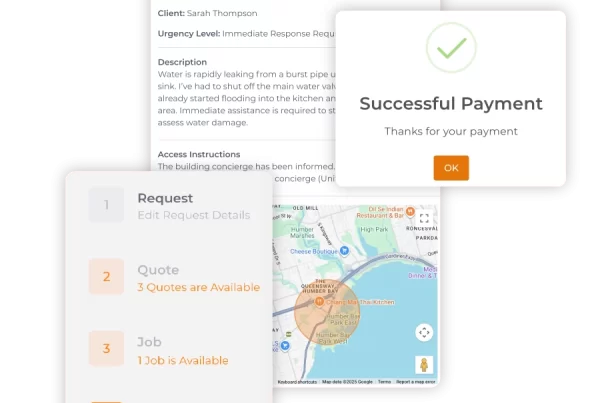
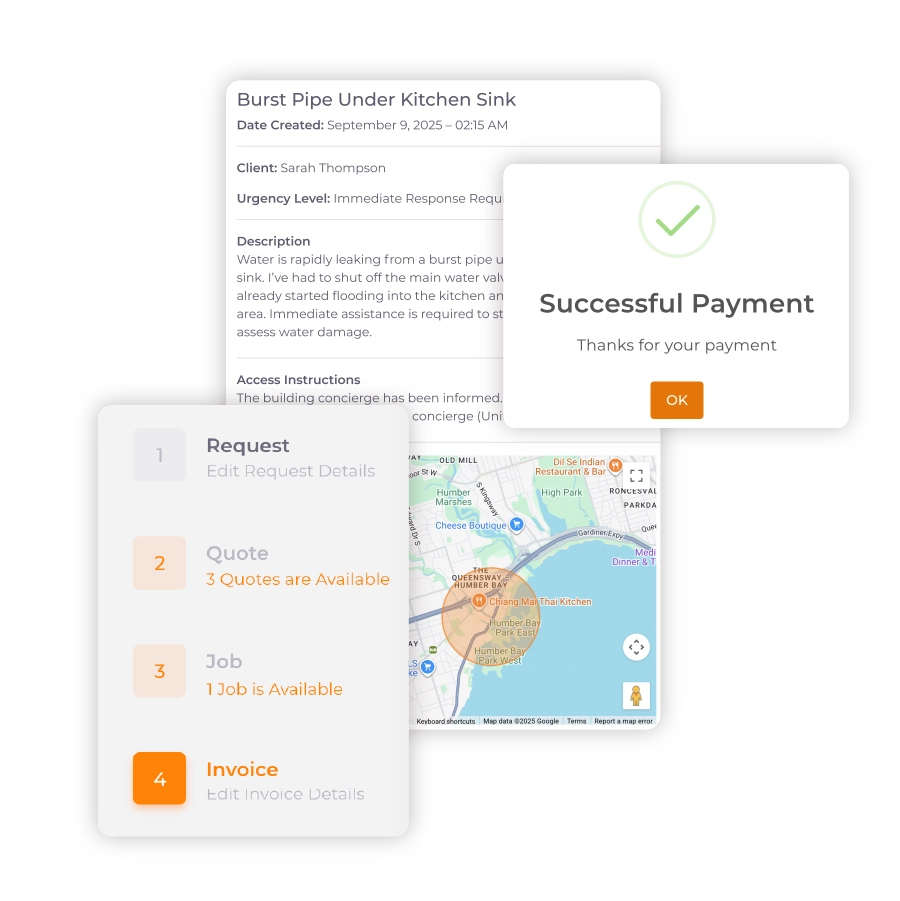
Automatic invoicing from completed jobs means no manual invoice creation. When a technician marks a job complete, ServiceDeck generates the invoice from job data – services performed, hours worked, materials used, and taxes applied. The invoice goes to the customer immediately, and your books update in real time. Get paid faster on every plumbing job.
Expense tracking per job connects every cost to the work that incurred it. Parts, labor, travel – all linked to specific jobs so you see real profitability, not just revenue minus vague expense categories. This level of detail transforms your bookkeeping for plumbing business operations from a guessing game into a precise financial record.
QuickBooks sync pushes invoices, payments, and expense data to your accounting platform automatically. Your bookkeeper or accountant always has current data without waiting for you to manually export anything. The QuickBooks integration keeps your financial records in sync at all times.
Payment collection built in gives customers easy ways to pay – online, credit card, or bank transfer. Every payment records automatically in your books. Outstanding balances update in real time. Chase fewer late payments because the system sends reminders for you.
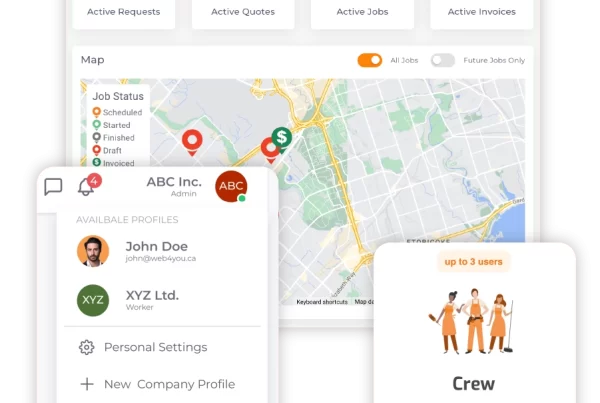
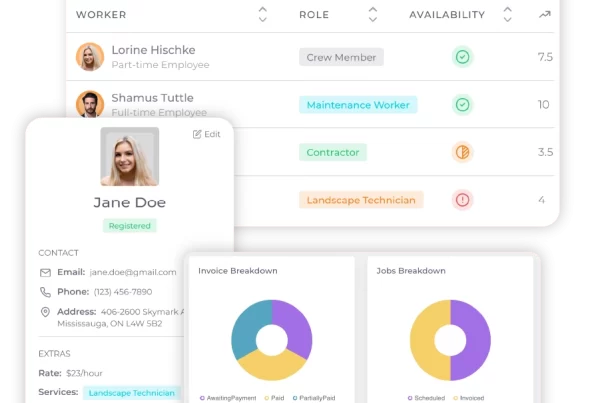
Financial visibility through dashboards shows revenue, outstanding invoices, expenses, and cash flow without generating custom reports. See your bookkeeping for plumbing business data at a glance. Know whether this month is on track before it ends. Simplify operations by having financial data available whenever you need it.
Works with your existing workflow. You do not change how your team operates. Technicians complete jobs the same way they always do – but now every job automatically generates the financial data your bookkeeper needs. The plumbing solutions in ServiceDeck are designed around real plumbing workflows, not generic business processes.
Ready to stop dreading bookkeeping? Book a demo and see how ServiceDeck turns job completion into automatic financial records.
Frequently Asked Questions
How does bookkeeping for a plumbing business differ from general bookkeeping?
Bookkeeping for plumbing business operations requires job-level financial tracking – knowing the revenue and costs of each individual job, not just monthly totals. It also involves tracking inventory, managing accounts receivable across many small invoices, and allocating costs like truck expenses and insurance to specific jobs or periods.
What is the easiest way to handle plumbing business bookkeeping?
Use field service software that integrates with your accounting platform. When job completion automatically generates invoices, expense tracking links to specific jobs, and data syncs to QuickBooks or Xero, bookkeeping happens as a byproduct of running your business instead of as a separate task.
How often should a plumbing business do bookkeeping?
Daily transaction recording is ideal – and achievable with automated software. Bank reconciliation should happen monthly. Financial review and reporting should happen at least monthly. Quarterly tax estimates require current books. The more automated your system, the less manual effort each interval requires.
Can ServiceDeck replace my accountant?
ServiceDeck handles the operational bookkeeping – invoicing, expense tracking, payment recording, and job-level financial reporting. Your accountant still handles tax preparation, financial strategy, and compliance. What ServiceDeck does is give your accountant clean, organized data instead of a pile of receipts and spreadsheets.
Does ServiceDeck track expenses for plumbing parts and materials?
Yes. Technicians log materials used on each job through the mobile app. These expenses attach to the job record, flow into profitability calculations, and sync with your accounting software. You see exactly how much each job cost in parts without manual tracking.
Conclusion
Bookkeeping for a plumbing business should not be a separate chore that steals hours from your week. When your field service platform generates invoices, tracks expenses, records payments, and syncs with your accounting software automatically, the books maintain themselves.
Stop letting bookkeeping pile up. Book a demo with ServiceDeck and turn every completed job into a clean financial record – automatically.
The ServiceDeck team brings decades of combined experience in field service management, helping businesses streamline operations and grow.