
Money comes in from dozens of clients. Expenses go out for supplies, payroll, insurance, and fuel. Somewhere in between, you need to know whether your cleaning business is actually profitable. Without proper accounting software for cleaning business operations, that question is surprisingly hard to answer.
Spreadsheets and shoeboxes full of receipts worked when you had five clients. But as your cleaning company grows, manual bookkeeping becomes a liability — missed deductions at tax time, invoices that slip through the cracks, and no clear picture of which services actually make money.
This guide covers what cleaning business accounting software should do, which features matter most, and how to choose the right platform for your operation.
Why Cleaning Businesses Need Dedicated Accounting Software
Cleaning businesses face accounting challenges that generic small business tools often miss. Revenue comes from a mix of one-time jobs, recurring contracts, and add-on services. Expenses include cleaning supplies that vary by job, vehicle costs, employee wages or contractor payments, and equipment maintenance.
Cleaning accounting software tracks these different revenue streams and expense categories automatically. Instead of manually categorizing every transaction, the system learns your patterns and does it for you.
Tax preparation becomes dramatically simpler. Cleaning business accounting software maintains organized records throughout the year, tracks deductible expenses like mileage and supplies, and generates reports your accountant can use directly. No more scrambling in April. While dedicated tax software for cleaning business operations can help with filing, most cleaning company accounting software handles the preparation side by keeping your records audit-ready year-round.
Cash flow visibility matters too. When you can see at a glance which clients owe money, which bills are due, and what your projected revenue looks like for next month, you make better decisions about hiring, equipment purchases, and growth investments. Effective cleaning business financial management requires this kind of real-time visibility — not quarterly reports that arrive weeks after the decisions have already been made.
Some owners start with simple bookkeeping software for cleaning business operations and upgrade as they grow. Others invest in comprehensive financial software for cleaning companies from the start. Either approach works as long as you move beyond manual tracking.
7 Accounting Features Every Cleaning Business Needs
1. Income and Expense Tracking
The foundation of any accounting system is accurate tracking of money in and money out. Office cleaning accounting software should automatically import transactions from your bank accounts and credit cards, categorize them, and match them to clients or jobs.
Look for software that handles the specific expense categories cleaning businesses use: cleaning supplies, equipment, vehicle fuel and maintenance, insurance, uniforms, and subcontractor payments.
2. Invoicing and Accounts Receivable
Professional invoices should go out immediately when a job is done. The best accounting software for cleaning business operations generates branded invoices automatically, tracks what is owed, and sends payment reminders for overdue accounts.
For recurring clients, the system should handle automatic billing on a set schedule — weekly, biweekly, or monthly — without manual intervention.
3. Payroll Management
Whether you pay employees hourly or salary, or work with independent contractors, your accounting software needs to handle it. Residential cleaning accounting software with payroll features calculates wages based on hours worked, handles tax withholdings, and generates pay stubs.
Integration with time tracking is essential. When your cleaners clock in and out through a mobile app, those hours should flow directly into payroll without manual data entry.
4. Tax Preparation and Reporting
Cleaning businesses have specific tax obligations and deductions. Window cleaning accounting software should track sales tax collection where applicable, categorize deductible expenses automatically, and generate tax-ready reports.
Quarterly estimated tax calculations prevent surprises at year-end. The software should track your income throughout the year and estimate your tax liability so you can set aside the right amount.
5. Job Costing and Profitability Analysis
Not every client and service is equally profitable. Carpet cleaning accounting software that includes job costing shows you exactly how much each job costs when you factor in labor, supplies, travel, and overhead.
This data reveals which services generate the highest margins and which clients are actually costing you money. Armed with this information, you can adjust pricing, focus marketing on profitable services, and have data-driven conversations with underperforming accounts.
6. Bank Reconciliation
Monthly bank reconciliation catches errors, identifies unauthorized charges, and ensures your books match reality. Good cleaning business accounting software automates most of this process by matching imported transactions with recorded entries and flagging discrepancies.
7. Financial Reporting
At minimum, you need profit and loss statements, balance sheets, and cash flow reports. House cleaning accounting software should generate these automatically with the ability to filter by date range, client, service type, or team member.
Custom reports help answer specific questions: Which month had the highest revenue? Which service type generates the most profit? How much did supply costs increase quarter over quarter?
Dashboard views give you the big picture at a glance. Instead of pulling reports manually, a well-designed dashboard shows today’s revenue, outstanding invoices, upcoming expenses, and month-over-month trends the moment you log in. This kind of real-time financial awareness is what separates cleaning businesses that grow strategically from those that grow blindly.
For businesses with multiple locations or crews, the ability to break down financial data by team or territory helps identify which parts of the operation are performing well and which need attention.

Common Accounting Mistakes Cleaning Businesses Make
Mixing personal and business finances. Using one bank account for everything makes bookkeeping a nightmare and creates tax problems. Keep business finances completely separate from day one.
Forgetting to track mileage. Driving between client locations is a significant deductible expense. Most cleaning business owners leave thousands of dollars on the table by not tracking mileage consistently. Software with GPS integration solves this automatically.
Ignoring accounts receivable. When you are busy cleaning, chasing unpaid invoices falls to the bottom of the priority list. Automated payment reminders and online payment options prevent revenue from slipping away.
Waiting until tax season to organize records. Year-round bookkeeping takes minutes per day. Scrambling to reconstruct a year of finances in March takes weeks and inevitably leads to missed deductions.
Undercharging for services. Without job costing data, many cleaning business owners set prices based on what competitors charge rather than their actual costs. When you know exactly what each job costs — including labor, supplies, travel, and overhead — you can price confidently and protect your margins.
Not separating revenue streams. A cleaning company that offers regular maintenance, deep cleaning, and specialty services needs to track each revenue stream separately. Understanding which services drive the most profit helps you focus marketing and allocate resources where they generate the highest return.

How ServiceDeck Connects Accounting to Operations
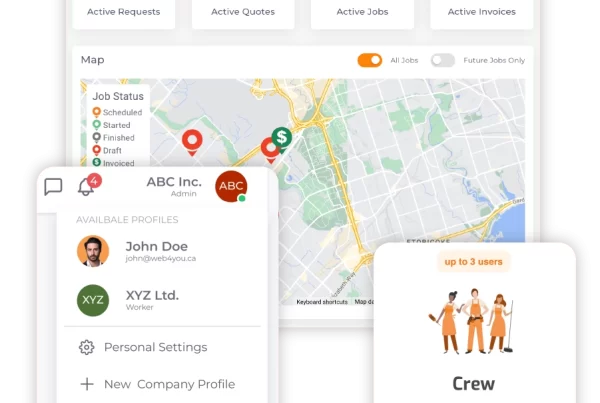
ServiceDeck bridges the gap between field operations and accounting by connecting scheduling, invoicing, and payments in one platform.
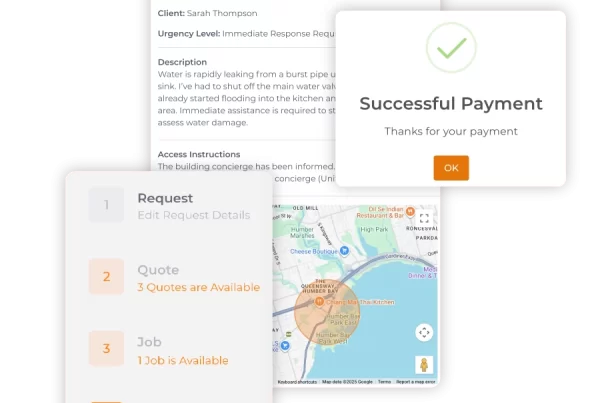
Automatic invoicing generates professional invoices the moment a job is marked complete. No manual data entry, no delays. Learn how to get paid faster with integrated billing.
Online payment collection lets clients pay immediately by card, improving cash flow and reducing accounts receivable. Time tracking with GPS verification ensures accurate payroll data flows directly from the field.
QuickBooks integration syncs your ServiceDeck data with QuickBooks automatically. Invoices, payments, and expenses transfer without duplicate entry, keeping your accounting records current.
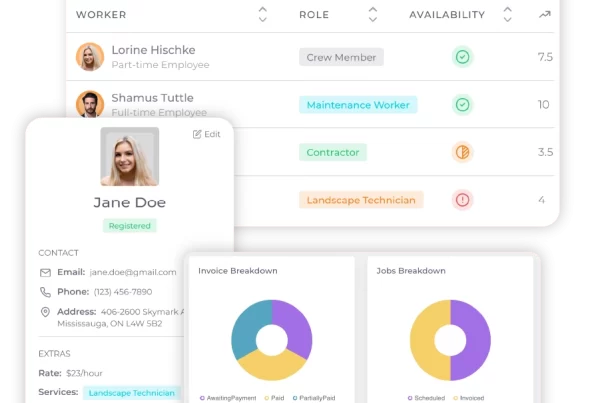
Job-level financial tracking shows revenue and costs per client and service type. Combined with the insights from cleaning business scheduling software, you get a complete picture of which jobs are worth pursuing.
Works for any cleaning niche. Whether you manage residential cleaning accounts, commercial contracts, or specialty services, ServiceDeck handles the financial tracking for all of them. Businesses of every size — from those exploring small cleaning business software to established companies — benefit from connected operations and accounting.
Ready to simplify operations and get your finances under control? Book a demo to see how it works.
Frequently Asked Questions
What is the best accounting software for a cleaning business?
The best platform combines invoicing, expense tracking, payroll, and tax preparation in one system designed for cleaning operations. For cleaning businesses using field service management software like ServiceDeck, integration between scheduling and accounting eliminates double data entry and provides real-time financial visibility.
How much does cleaning business accounting software cost?
Basic accounting tools start at $15-30 per month. Full-featured platforms with payroll, job costing, and integrations range from $50-150 per month. Many cleaning business owners find that the time saved on manual bookkeeping and the deductions captured by automated tracking more than cover the subscription cost.
Can I use QuickBooks for my cleaning business?
Yes. QuickBooks is widely used by cleaning businesses for accounting. When paired with a field service platform like ServiceDeck that offers QuickBooks integration, your operational and financial data stay synchronized automatically.
Do I need separate software for accounting and scheduling?
Not necessarily. Platforms like ServiceDeck handle scheduling, invoicing, and payments, then integrate with accounting software for the full financial picture. This connected approach is more efficient than managing multiple disconnected tools. See how booking software fits into this workflow.
What tax deductions should cleaning businesses track?
Common deductions include cleaning supplies, equipment purchases and maintenance, vehicle mileage, insurance premiums, uniforms, marketing expenses, software subscriptions, and subcontractor payments. Accounting software that automatically categorizes these expenses ensures you never miss a deduction.
Does ServiceDeck handle accounting?
ServiceDeck handles invoicing, payment collection, and job-level financial tracking. For full accounting capabilities including tax preparation and payroll, it integrates with QuickBooks and similar platforms. Book a demo to see how the integration works.
Conclusion
Cleaning business accounting does not have to be overwhelming. The right software automates transaction tracking, generates invoices, manages payroll, and prepares your finances for tax time — all while giving you real-time visibility into your profitability.
Stop guessing whether your business is making money. Accounting software for cleaning business operations provides the clarity you need to make confident decisions about pricing, hiring, and growth.
Ready to connect your operations and finances? Book a demo and see how ServiceDeck integrates scheduling, payments, and accounting into one workflow.
The ServiceDeck team brings decades of combined experience in field service management, helping businesses streamline operations and grow.