Most plumbing business owners know exactly how to fix a pipe – but struggle to tell you which jobs actually make money. The work gets done, the invoices go out eventually, and at the end of the month you check the bank account and hope it all adds up. This is not accounting. This is guessing.
The best accounting software for small plumbing business operations connects job data directly to your financial picture. Every completed job feeds into your revenue tracking. Every material purchase links to a specific project. Every technician’s hours tie to labor costs. When your accounting runs on real job data instead of end-of-month guesswork, you finally see which parts of your plumbing business make money and which parts drain it.
Why Plumbing Businesses Need Specialized Accounting
General accounting software tracks income and expenses. That is not enough for a plumbing business. You need to track finances at the job level – knowing not just how much came in this month, but how much each individual job cost and earned.
Job costing reveals the truth. A job that bills $800 seems profitable until you account for three hours of labor, $150 in parts, an hour of drive time, and a return visit to fix a callback issue. Accounting software for plumbing business operations breaks down every cost per job so you see real margins, not gross revenue.
Materials tracking prevents waste. Plumbing parts are expensive, and they walk off trucks. Without tracking which parts go to which job, you lose money to waste, theft, and over-ordering. Connecting material costs to specific jobs shows exactly where your supply budget goes.
Labor cost accuracy matters. Your largest expense is labor. Are you pricing jobs to cover actual labor costs – wages, taxes, insurance, truck costs, training? The best accounting software for plumbing business owners links timesheet data to job costs so you know if your pricing covers your real expenses.
Tax preparation becomes simple. When every transaction is categorized, every receipt is captured, and every job’s financial data is organized, tax season stops being a panic. Your accountant or tax preparer gets clean data instead of a shoebox of receipts.
What to Look for in Plumbing Accounting Software
Job-Level Profitability Tracking
The single most important feature. Every job should show total revenue, labor costs, material costs, overhead allocation, and net profit. When you can see profitability per job type – emergency repairs, installations, maintenance – you know where to focus your business.
Automated Invoice Generation
When a technician completes a job, the invoice should generate automatically from the job data — services performed, materials used, labor hours, and applicable taxes. No manual creation. No waiting for paperwork to arrive at the office.
Expense Tracking and Categorization
Every business expense – arts, fuel, insurance, tools, truck payments – needs to be tracked and categorized. The best accounting software for small plumbing business operations automatically categorizes recurring expenses and flags unusual charges.
Integration With Existing Accounting Tools
Most plumbing businesses already use QuickBooks, Xero, or similar accounting platforms. Your plumbing-specific software should sync data with these tools, not replace them. Invoices, payments, and expenses flow automatically so your books stay current without double entry.
Cash Flow Visibility
Know how much money you have today, how much is owed to you, and how much goes out next week. Cash flow dashboards show outstanding invoices, upcoming expenses, and projected balances so you can plan purchases and payroll with confidence.
Financial Reporting
Monthly revenue by service type. Profit margins by job category. Technician productivity measured in billable hours. Customer lifetime value. These reports turn raw financial data into business intelligence that drives better decisions.
Common Accounting Mistakes Plumbing Businesses Make
Pricing based on competition instead of costs. If your competitor charges $150 for a drain cleaning, you match it — without knowing if that covers your costs. Accounting software shows your actual cost per job type so you price based on your numbers, not someone else’s.
Not separating job types in reporting. Lumping all revenue together hides which services are profitable and which are not. Your emergency repair margins might be great while your installation margins are thin — but you will never know without job-level tracking.
Delaying invoicing. Every day between job completion and invoice delivery is a day you wait longer for payment. Automated invoicing eliminates this gap entirely.
Ignoring indirect costs. Truck payments, insurance, fuel, office rent, software subscriptions – these overhead costs need to be allocated across jobs to understand true profitability. Many plumbing owners only track direct costs and overestimate their margins.
Mixing personal and business expenses. This creates accounting headaches and tax risks. Software that categorizes expenses and links them to business accounts keeps personal and business finances separate.
How ServiceDeck Connects Jobs to Finances
ServiceDeck bridges the gap between field operations and financial management. Instead of entering data twice – once for job management and once for accounting — everything flows through one system.
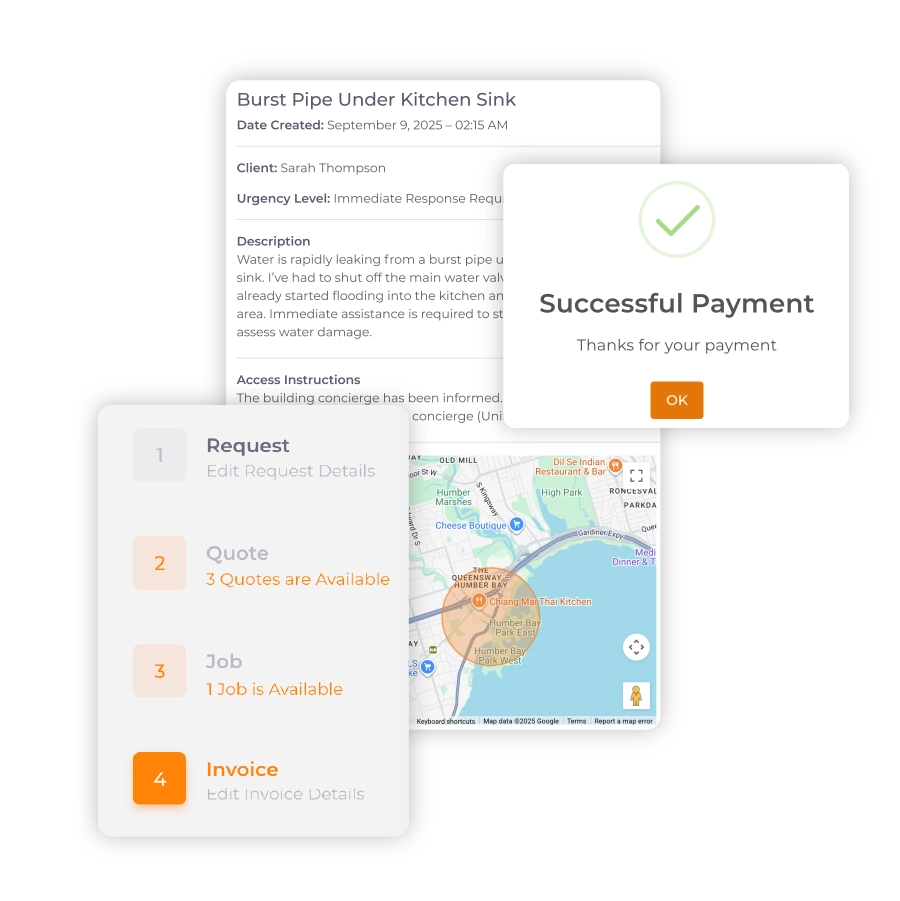
Job-to-invoice automation means every completed job generates an invoice instantly. Labor hours, materials used, and service charges pull directly from the job record. No re-entering data. No waiting for paperwork. This is how you get paid faster on every plumbing job.
Real-time cost tracking records labor time, material usage, and expenses against each job as the work happens. When a technician clocks hours or logs parts, the job’s cost updates immediately. At any point, you can see a job’s current profitability.
QuickBooks integration syncs invoices, payments, and expenses with your accounting platform automatically. Your books stay current without manual journal entries. The QuickBooks integration ensures your accountant always has accurate data.
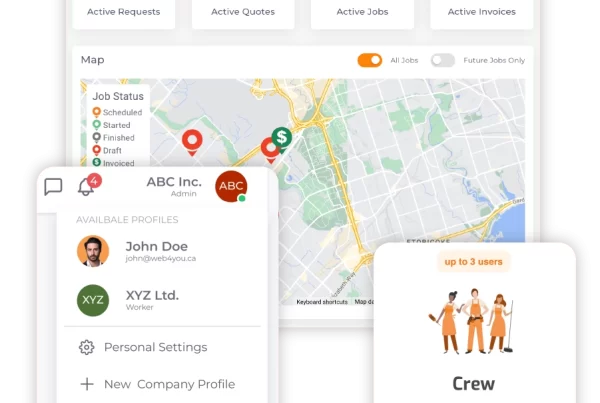
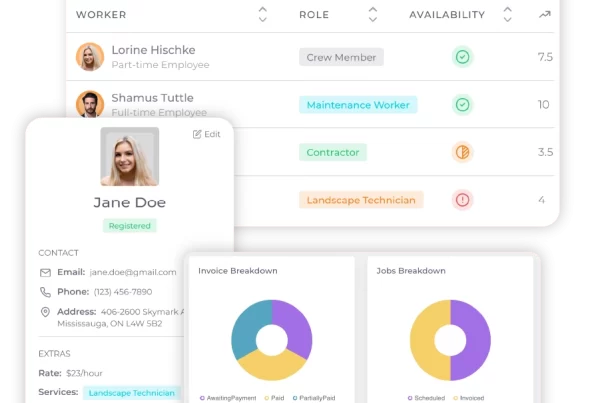
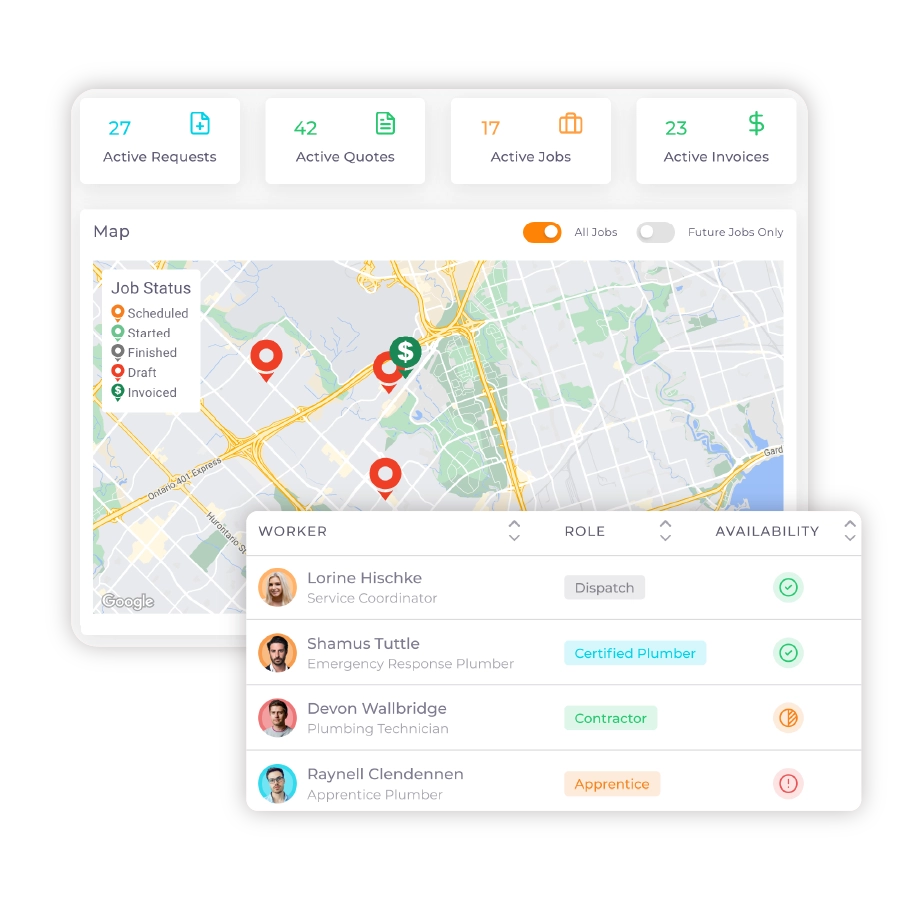
Financial dashboards show revenue, outstanding invoices, payment trends, and profitability by service type. See your business’s financial health at a glance without running custom reports. Make informed decisions about pricing, hiring, and growth.
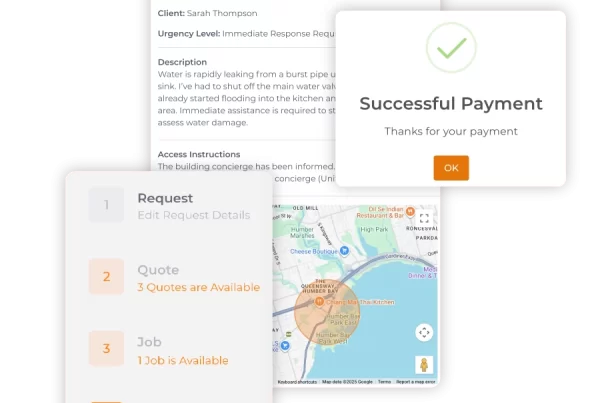
Payment collection gives customers multiple ways to pay – online, credit card, bank transfer. The faster and easier you make payment, the faster cash arrives. Integrated payment processing means money moves from customer to your account with minimal friction.
Profitability reporting by job type shows which services drive your business. Compare margins across emergency repairs, scheduled maintenance, new installations, and commercial contracts. Double down on what works and adjust pricing on what does not. Win more work by focusing on the most profitable opportunities.
Ready to know exactly how your plumbing business performs financially? Book a demo and see how ServiceDeck connects your jobs to your bottom line.
Frequently Asked Questions
What is the best accounting software for a small plumbing business?
The best solution combines job-level cost tracking with standard accounting features — invoicing, expense categorization, financial reporting, and tax preparation. For plumbing specifically, look for a field service platform that integrates with QuickBooks or Xero so job data flows directly into your books.
How does accounting software differ for plumbing businesses?
Plumbing businesses need job-level profitability tracking that standard accounting tools do not provide. You need to know the cost and profit of each individual job – not just monthly totals. This requires integration between your field operations (job management, time tracking, materials) and your accounting system.
Can I track material costs per job with ServiceDeck?
Yes. Technicians log materials used on each job through the mobile app. These costs attach to the job record and flow into the invoice and profitability calculations. You see exactly how much each job cost in materials, labor, and overhead.
How does automated invoicing improve plumbing business cash flow?
Automated invoicing eliminates the delay between completing a job and sending the bill. Instead of waiting days for paperwork to reach the office, invoices go out the moment the job is marked complete. Faster invoicing means faster payment, which means healthier cash flow.
Does ServiceDeck integrate with QuickBooks for plumbing accounting?
Yes. ServiceDeck syncs invoices, payments, and financial data directly with QuickBooks. This eliminates double data entry and ensures your accounting records always match your job data. Your accountant gets clean, current financial information without chasing down paper records.
Conclusion
Plumbing profitability is not about charging more – it is about knowing your costs. The best accounting software for small plumbing business operations connects every job to every dollar, showing you real margins instead of estimated ones.
Stop guessing at your numbers. Book a demo with ServiceDeck and see exactly where your plumbing business makes and loses money.
The ServiceDeck team brings decades of combined experience in field service management, helping businesses streamline operations and grow.